

From microdramas to e-Books, how we experience stories is changing.
In the age of AI, it’s difficult to compete with machines. And so value is rapidly shifting into creating new design objects, user experiences and ecosystems.
But these opportunities don’t need to reside solely with publishers, technology companies or distribution channels.
We might not want to use AI to generate novels, but authors can now use AI to create unique experiences of their story worlds.
(And, self plug, it’s what SOJEN is designed to do).
This shifts us from a transmedia or ‘1000 fans’ era, into one where authorship will be extended from story through media and into experience.
I wrote about this at length:

Exploring Microdramas for Public Service
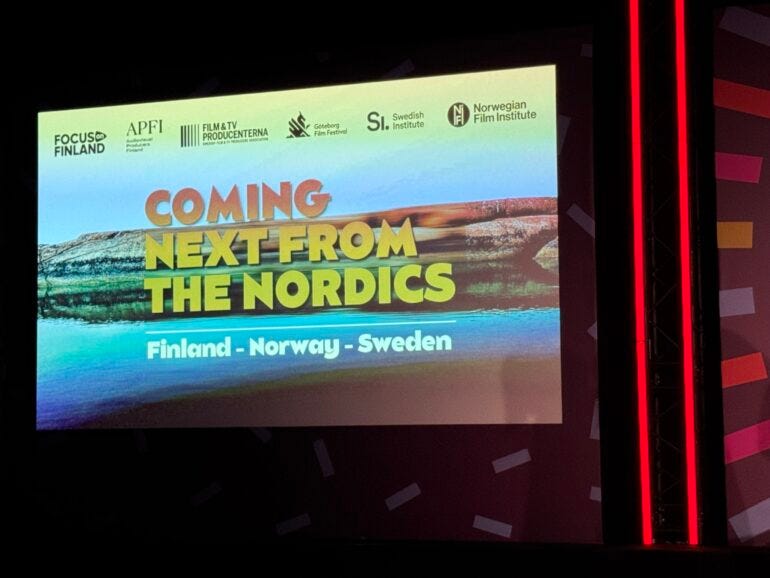
Earlier this year, Nordic broadcasters started to explore whether the microdrama format could help them reach younger audiences.
“This points to microdrama as a gateway. It can advertise longer content, but also function as high-quality fiction on third-party platforms. For Yle, it is also a development tool: Most microdramas are commissioned from young creators, freelancers or small emerging companies, with budgets at a fraction of traditional productions.”
And so first we start with stories. Newer formats are often aligned with newer talent pools and creators who understand the viral, social, endless feed in which the media lives.
But the format itself, which relies on microtransactions, gamification and new platforms also lends itself to think about how publishers might decouple stories from distribution and create a new type of content engine:
”Comedy, love stories and youth-orientated narratives appear suited to the form. Still, gaps remain. Monetisation models are unclear for public broadcasters on third-party platforms…There is also a Nordic collaboration question: Unlike traditional series, microdramas may not travel simply through subtitles. Wild believes the future may lie in sharing scripts and formats rather than finished videos, allowing each country to produce hyper-local versions. “Icelandic kids want to hear Icelandic, and Norwegian kids want Norwegian,” she says.
This aligns to concepts in my own work on pushing creation closer to the ‘edge’. I envision authors creating microexperiences that are ‘compiled at runtime’ for individual audiences or users.
eBooks and AI
Beyond microdramas, the fusion of AI with older forms of media has created new hybrid experiences.
Not all of them were warmly received.
When Amazon and Eleven Labs introduced the ability to ‘chat with’ an eBook, publishers didn’t always welcome the concept with open arms.
This aligns with my previous comments on how older media is responding to the AI era:
”Their responses include legal, licensing, relenting or partnering. Studios are tapping into new sources of talent and distribution (from influencers to creators on Reddit); creating licensing deals with AI companies; or creating AI-based experiences for fans.”
Amazon, for example, added a feature to Kindle that lets readers “highlight passages or type questions into a chatbot to get "spoiler-free" answers about plot, characters, and themes.”
The Authors Guild sharply disagrees that it’s a mere ‘expansion’ of experience. The organization claimed that Amazon would need to separately need to negoiate new rights.
But what strikes me about this is the experience itself. Eleven Labs took a similar approach:
”ElevenLabs' VoiceChat, launched on its ElevenReader app in early December, offers similar functionality, though for audiobooks. The feature lets listeners ask questions about audiobooks using voice commands, receiving AI-generated responses in one of ElevenLabs' 500 synthetic voices.”
Honestly, both expansions on the experience of an audio book feel banal today.
Imagine a companion reader who doesn’t just answer questions, but adds their own murmured commentary as you read. It would expand the experience of an eBook from being a solitary experience into a semi-communal one, albeit with a machine.
The Experience Era
AI challenges everything. The act of creation will no longer be solely from humans, and every media category is now competing with machines.
But building new experiences for readers and consumers is no longer reserved for big studios or platforms. Where AI can play a key role in helping human authorship is in providing an easier path to thinking through how stories can be experienced.
For centuries, the design of a book didn’t change. Authors could rarely influence the experience of reading.
But now, authors can adapt new approaches to how their stories are experienced. Which may lead to a different type of story renaissance: one where stories aren’t just decoupled from the media in which they’re contained, but from the channels on which they once relied.
There is no competition with The Machine. There is no competition, only expansion or resistance.